Make Issues: The Turning Point in Business Attitudes Toward AI
Time to Turn AI Enthusiasm Into Results
Dan Etheridge, Make's Head of Brand, analyzes industry survey results about the amazing potential of AI and the real barriers to adoption.
Building a brand is about finding out what customers care about, what worries them.
And figuring out how our product can help.
But when a company enters a space like automation or AI that's on everyone's lips right now, it gets a special opportunity.
The opportunity to look at how society as a whole thinks and feels about today's biggest questions.
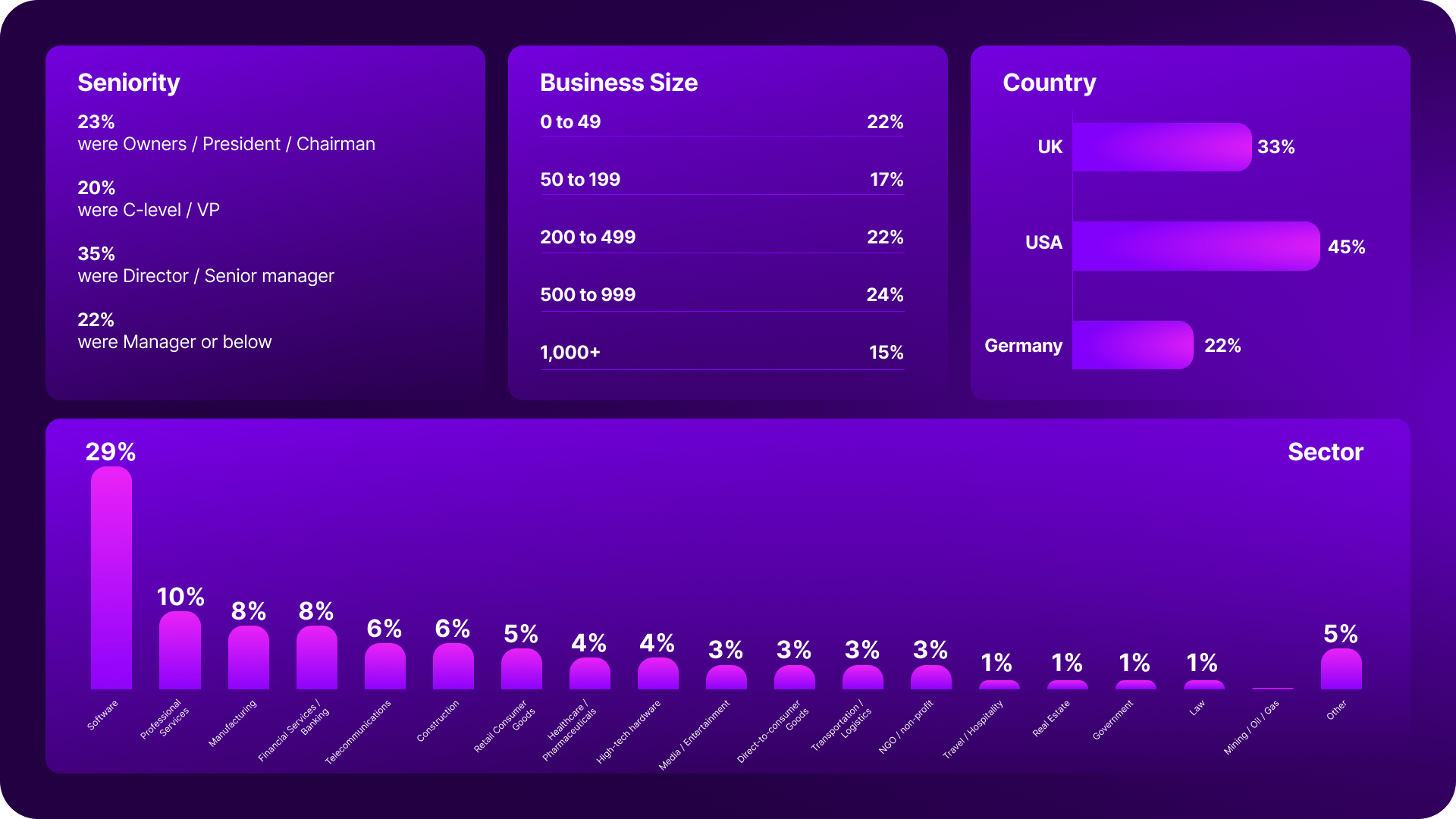
That's why earlier this year, Make conducted research with over 1,200 business decision-makers.
The goal was to understand how people really feel about the role of AI in the modern workplace.
The survey results revealed strong expectations alongside lingering concerns.
The industry-wide conversation was no longer about hype or whether to adopt AI.
It was about 'how' to create truly valuable results.
We're having similar conversations at Make.
So we've gathered some practical approaches to eliminate lingering concerns and pave the way for successful AI adoption.
Let's take a closer look at what businesses are thinking in the agentic era and how Make fits in.
Excitement About AI's Potential
Let's set the stage first.
The overall sentiment toward AI is positive.
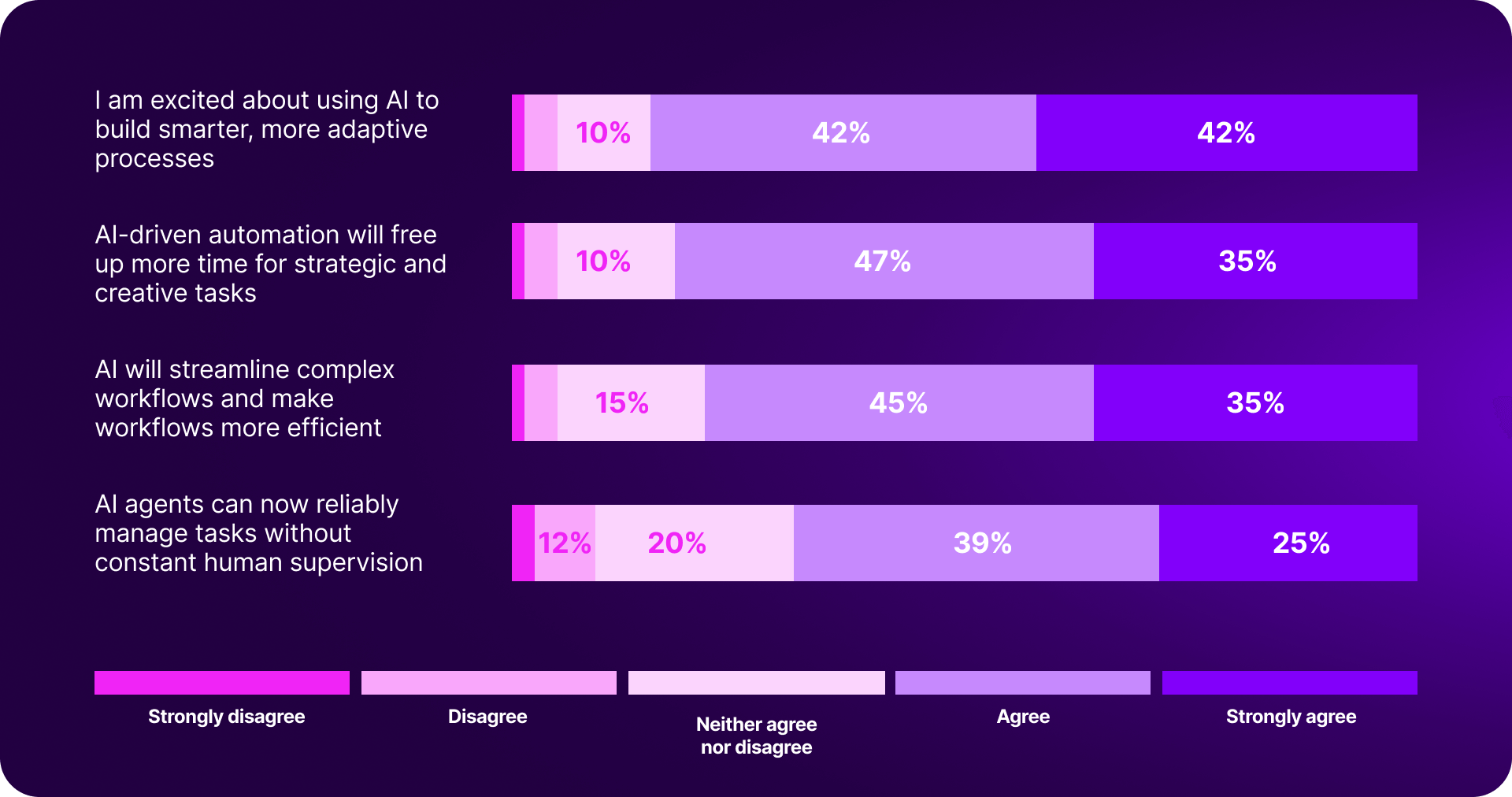
84% of respondents worldwide, regardless of company size — from startups to enterprises with thousands of employees — or job level, said they have high expectations for AI's ability to create smarter, more flexible processes.
But as Make's colleague Darin Patterson recently noted, the opportunity isn't in AI itself — it's in what you build with it.
For example, 80% of respondents see AI as a way to simplify complex workflows.
And 82% believe AI-powered automation will free up time for more strategic and creative work.
The bottom line?
Most of the business community sees AI as a key driver of efficiency and transformation.
Growing Trust in AI's Autonomous Capabilities
In some areas, AI enthusiasm is translating into clear confidence.
For example, 64% of respondents now believe AI agents can reliably handle tasks without constant human oversight.
The idea that AI could evolve from a simple tool to an autonomous colleague has become commonplace.
As AI agents become more advanced and users grow comfortable building and running agentic workflows, this confidence will only increase.
Concerns and Worries
But this confidence doesn't appear equally across all people or all situations.
A significant number of respondents (39%) admitted they don't feel ready to adapt to AI-powered workflows.
Looking more closely, half of the business leaders surveyed felt that the pace of AI adoption is creating uncertainty and confusion.
In other words, even some respondents confident in AI's advantages feel uneasy about the method and speed of adoption.
This discomfort can stem from various reasons, but 55% of respondents agreed that removing human judgment from critical workflows could lead to problems.
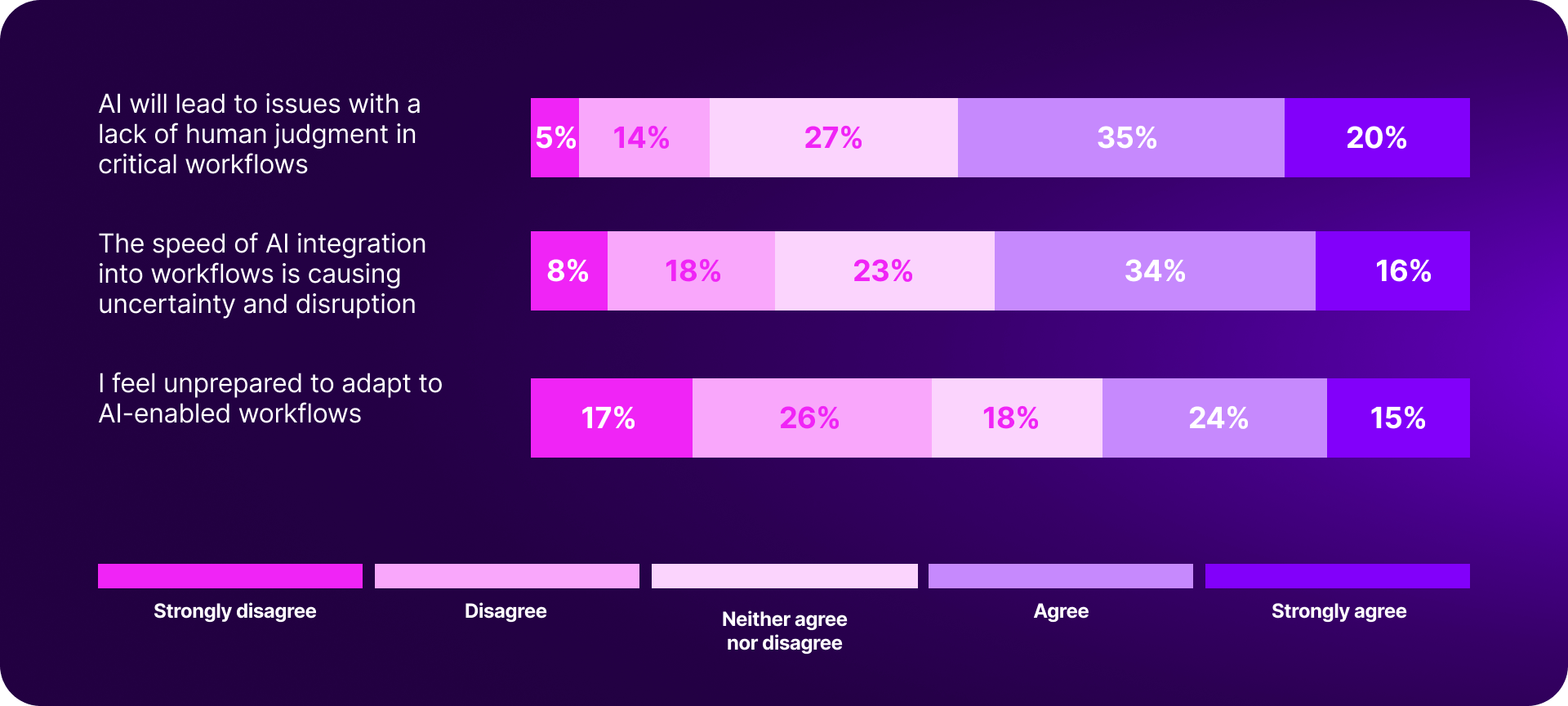
The key takeaway is that while enthusiasm for AI is clear, organizations are struggling to keep up with the pace of change and are understandably wary of losing human oversight in the process.
Easing the Tension
It's a good thing that expert users are thinking critically about how businesses are adapting to AI right now.
Finding risks and concerns is a signal that leaders genuinely want to move into the agentic era.
But to slightly rephrase Darin's point from above, the problem isn't AI — it's how you use it.
The tension points identified by survey respondents are largely matters of mindset, culture, and skills — things business leaders can directly influence.
First, it helps to consider the long history of automation tools.
Even everyday technologies like the printing press were once seen as disruptive, but learning to leverage new discoveries can lead to new levels of achievement relatively quickly.
Building a company-wide culture that embraces new technology and the experimentation and mistakes that come with it is truly important for creating an adaptive enterprise.
These are the companies that can reap the real benefits of new resources like agentic AI.
By openly discussing and encouraging experimentation and new ideas, while building an agentic stack centered on platforms that prioritize good data, good decision-making, and collaboration, you can create transparent and trustworthy AI usage.
For example, choosing a visual-first platform like Make helps share knowledge about how complex automated workflows actually work, enables even less technical users to understand and build automations themselves, and takes AI out of the technical black box.
Making AI accessible to everyone is especially a way to combine 'more' human professional judgment.
By providing AI tools directly to domain experts in the organization, especially those without technical backgrounds, their expertise can be leveraged more effectively.
As cases like customer Stellantis &You show, the person closest to the problem is best positioned to verify whether automation is truly the needed solution, whether it produces the most accurate results, and whether the right questions lead to efficient problem-solving.
Additionally, rather than feeling anxious about new AI-based solutions, domain experts helping the business can gain practical experience, grow professionally, and feel more confident and invested in what they build and use every day.
Conclusion
Overall, this study confirms what most forward-thinking people have known for a while.
AI is truly remarkable.
And as more users confirm AI's potential to improve efficiency and unlock more creativity, expectations are growing stronger and confidence is increasing that agents can handle more tasks autonomously and that AI can help more broadly.
But to properly leverage AI, preparation and above all trust are crucial.
Going forward, only businesses that balance AI-driven efficiency with organizational readiness and human oversight will be able to successfully embrace AI.
IMPAKERS Blog | Make Code App Features Read more
Source: Make, "Survey says...it's time to turn AI enthusiasm into real results", https://www.make.com/en/blog/make-ai-survey, (2025-10-06)