Make Issues: Make Waves '25 Session Key Takeaways
Missed the most important discussions from Make's annual customer event Waves '25 held last week?
Here's a summary of some of the insightful content shared by experts from companies like Make, Meta, FranklinCovey, and Webflow.
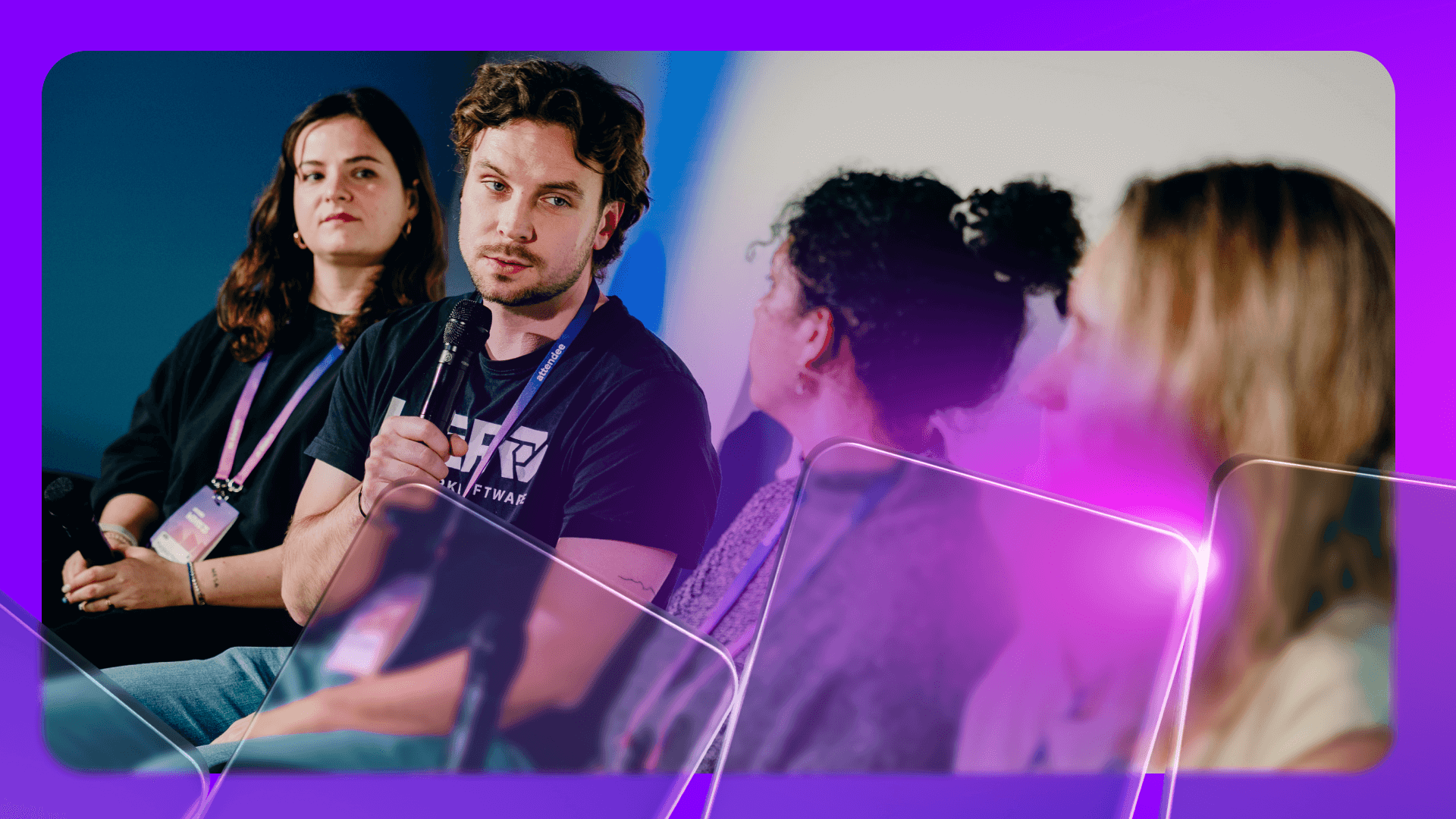
Last week's annual customer event Waves '25 featured a two-day agenda focused on helping businesses build, grow rapidly, scale, and actually achieve results through automation and AI.
But these were just the big themes highlighted in keynotes and product announcements.
Make's experts and influential leaders in the AI industry shared even more in-depth stories throughout the entire event.
From overcoming the challenges of adopting automation and AI in companies to remembering that AI is ultimately about people, let's look at the key takeaways from the Waves '25 sessions.
Watch the Full Keynote
Make's leadership showed how to avoid the hype of automation and AI and get real value through Make.
Learning From Failure
We all lean on AI and automation to solve business problems, but it doesn't always work out perfectly.
One of the most common themes across the focused sessions was the importance of embracing failure as an opportunity for learning and improvement.
"Celebrate Failure Over Success"
Make's Head of Business Automation and AI, Sarah Maldon, and FranklinCovey's Global CIO, Blaine Carter, kicked off the day with a joint talk titled Building an AI-Driven Work Environment.
They discussed how the journey toward an AI-first work environment isn't always easy.
"I would say 90% of the projects we started with were failures."
Sarah said this about her early experiences getting real value from AI tools.
Blaine agreed, noting that many of their early experiments didn't succeed partly because they weren't introduced to employees in useful ways, and partly because they may not have been the best way to solve the problem in the first place.
Employees treated AI tools as novelties to try for an afternoon, and soon stopped using them without fundamentally changing how they worked or what they could accomplish.
"I would say 90% of the projects we started with were failures." - Sarah Maldon, Make's Head of Business Automation and AI
To make FranklinCovey a leader in automation and AI, they had to rethink and redevelop long-term processes.
The first step was identifying specific business needs that had to be met, could be automated, and would make a measurable difference to the company.
Once solutions were developed, they also needed to create programs to guide and encourage all users through the unfamiliar new ways of working, building genuine understanding and new skills.
This second step particularly reminded Blaine of watching promising young ski jumpers learn to conquer increasingly bigger jumps.
He said the coaches "celebrate failure more than success," providing the courage and safe environment that could produce future Olympic athletes.
This is a good approach to keep in mind when nurturing AI champions within organizations.
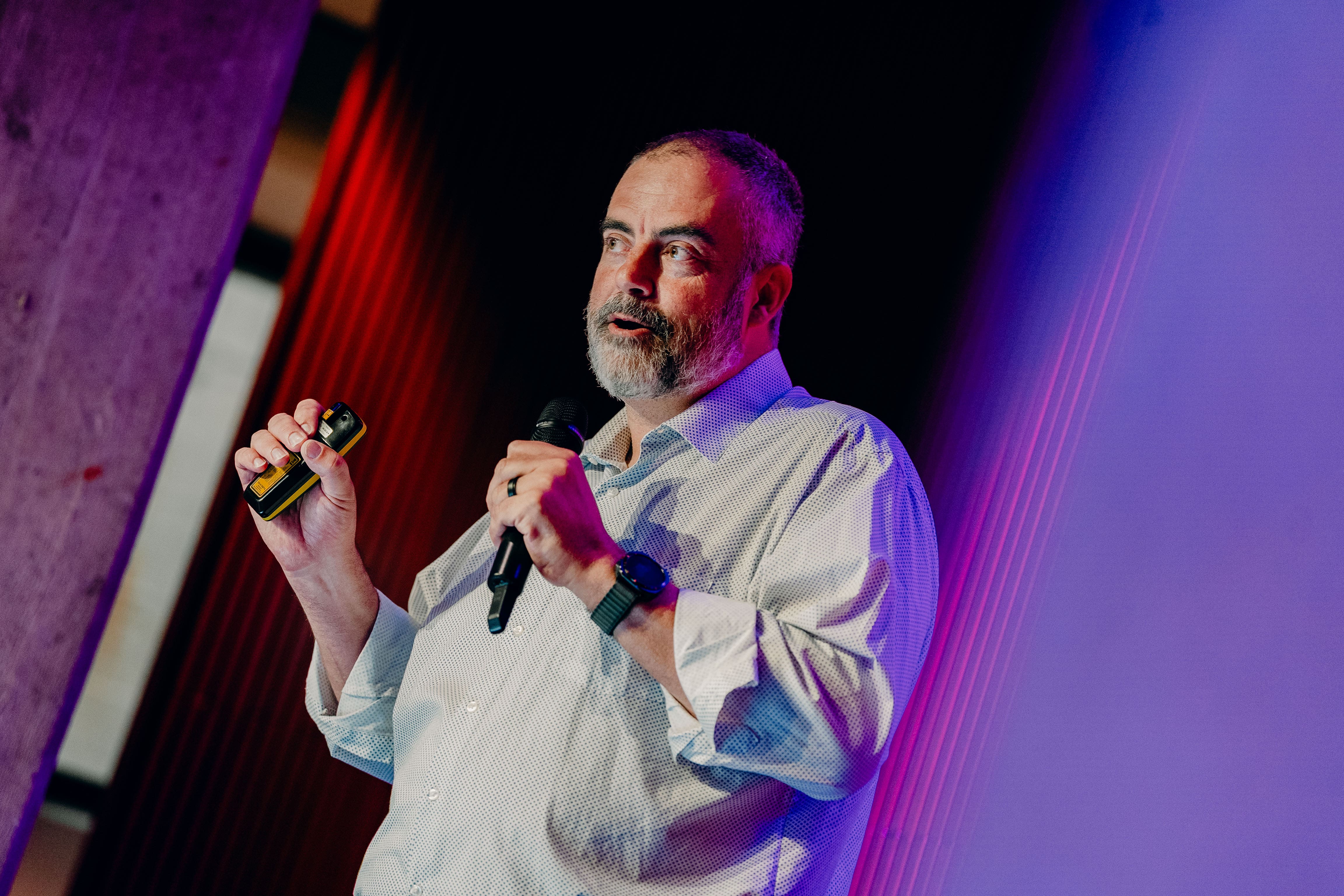
"Take the Middle Approach When Adopting AI Platforms"
But the challenges of AI adoption don't always have to result in complete failure to be valuable.
In one of the most popular talks at Waves '25, Freestyle or Framework? How to Manage Automation for Maximum ROI, two long-time Make users shared how they adopted the Make platform in almost opposite ways.
For example, Diego Alberti, Head of Automation at Daptify, shared how he provided Make's automation capabilities to thousands of employees through a thoroughly planned, centralized approach in a similar role at a previous large enterprise.
On the other hand, Gabriel Stock shared TravelPerk's approach of allowing nearly all employees to access and experiment with Make in a much more open way.
Both panelists had good reasons for adopting their chosen strategies.
Diego had to prioritize access rights, data management, and extensive change management, while Gabriel's organization focused most on quickly leveraging the advantages of custom AI and automation.
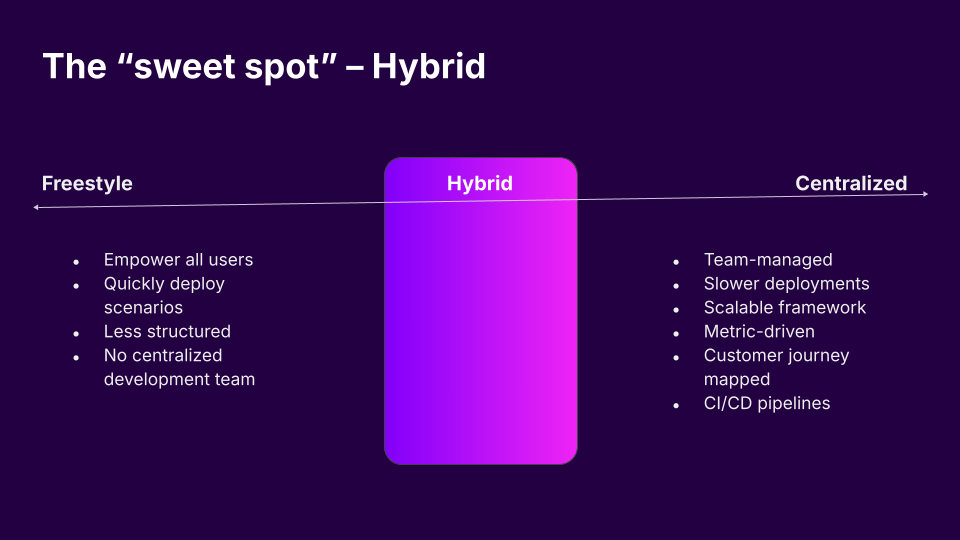
The centralized 'framework' approach was slow and prone to bottlenecks, while the open 'freestyle' approach was inefficient to build and maintain.
Both AI adoption experts agreed that the ideal was a happy middle ground between freestyle and framework — a hybrid approach.
This largely preserves the creativity of 'instant builders' that comes when individuals create their own solutions with Make, while introducing the standardization and security guarantees needed to scale automated solutions across a growing business.
Diego said the ultimate goal is to "reach a hybrid approach," which requires dedicated effort but offers substantial real rewards.
Iterate, Iterate, and Iterate Again
Another mindset about learning from imperfect projects is the process of iteration.
This was also a theme covered across multiple sessions.
"The Era of Fast Fashion for Software"
In the Unleash Your Inner Vibe Coder session, Vercel's Farham Ali talked about how we are now in "the era of fast fashion for software."
He demonstrated this idea live by using his company's vibe coding software to create screens and Make's automation as the backend to sketch a working app in just minutes.
By combining vibe coding and no-code tools to assemble usable prototypes, test them yourself, and improve issues, you can fail faster and reach solutions much more quickly.
Make's product designer, Hedy Remus-Byrd, supported this thinking by sharing how her UX team uses this rapid testing approach to create prototypes daily, plan micro-interactions, and define edge cases.
"Make It Work, Then Make It Better"
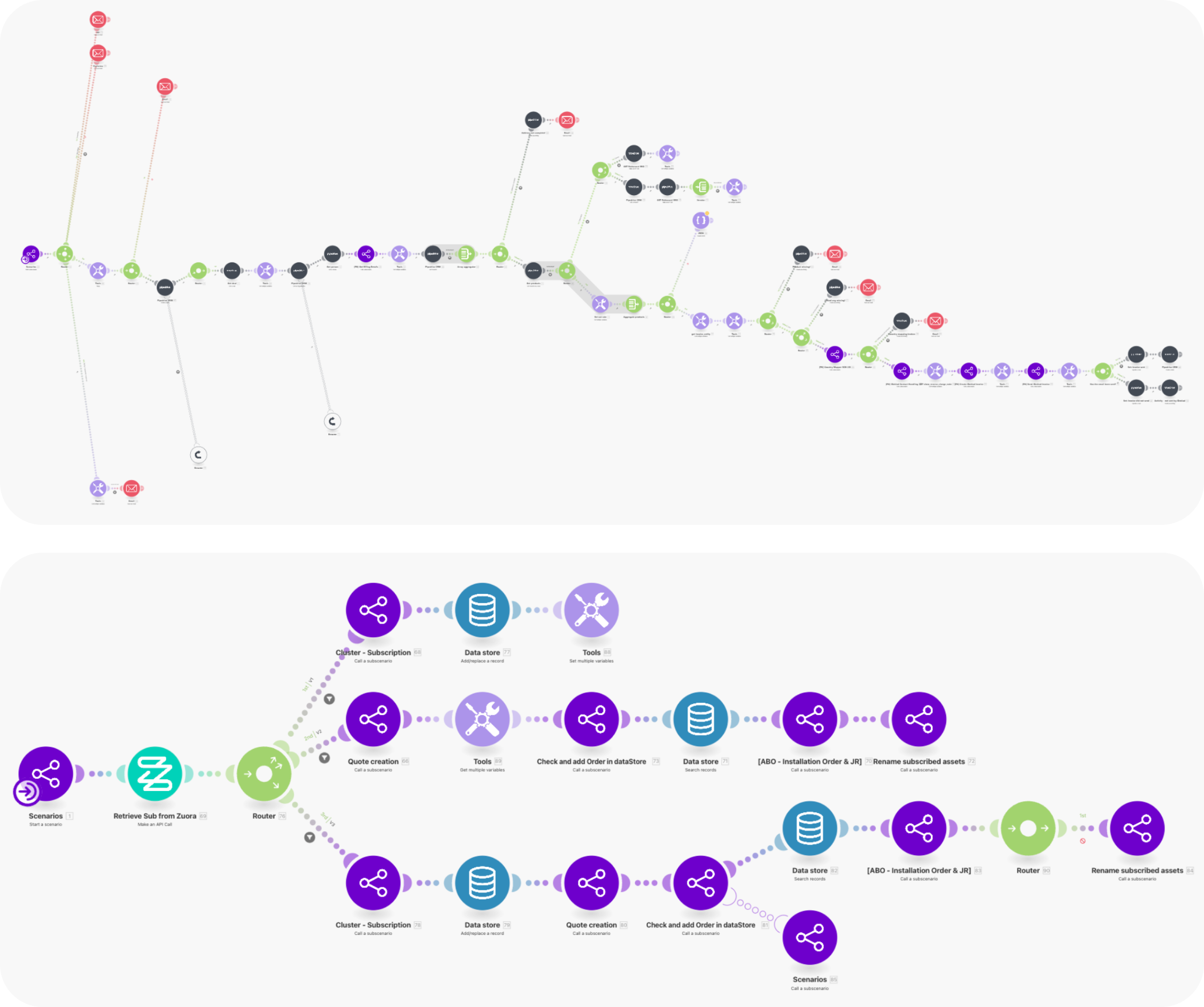
In another panel session titled Build Better, Faster, Stronger, Make's Value Engineer Daniel Zrust talked about how he used to take pride in building complex scenarios in Make.
These scenarios were massive, intricate, and impressive, but he soon realized they were difficult for colleagues who needed to manage or adjust them to understand.
So he started exploring subscenarios and new features that use scenarios as functions.
He began breaking complex automated workflows into reusable, understandable parts that anyone across the company could easily modify when needed.
Fellow panelist Lior Talmor from AppsFlyer summed it up simply: "Make it work, then make it better."
More possible than ever with new Make features.
Focus on AI and Automation Education with Make Academy
But the ability to endure failure and iterate effectively using new features doesn't happen overnight.
Simply giving people access to AI and automation tools isn't enough — you need to teach everyone in the organization to use these tools effectively.
FranklinCovey's experience already shows that training materials should be an integral part of adopting automation and AI in a company.
While the specifics of training programs vary depending on individual employees' needs and personalities, according to Diego and Gabriel's experience, Make Academy is a great way to start this learning journey on solid ground.
In fact, Diego shared how he incorporated Make Academy into a new hire's onboarding process, and within a month, that new employee was already automating thousands of hours worth of work each month.
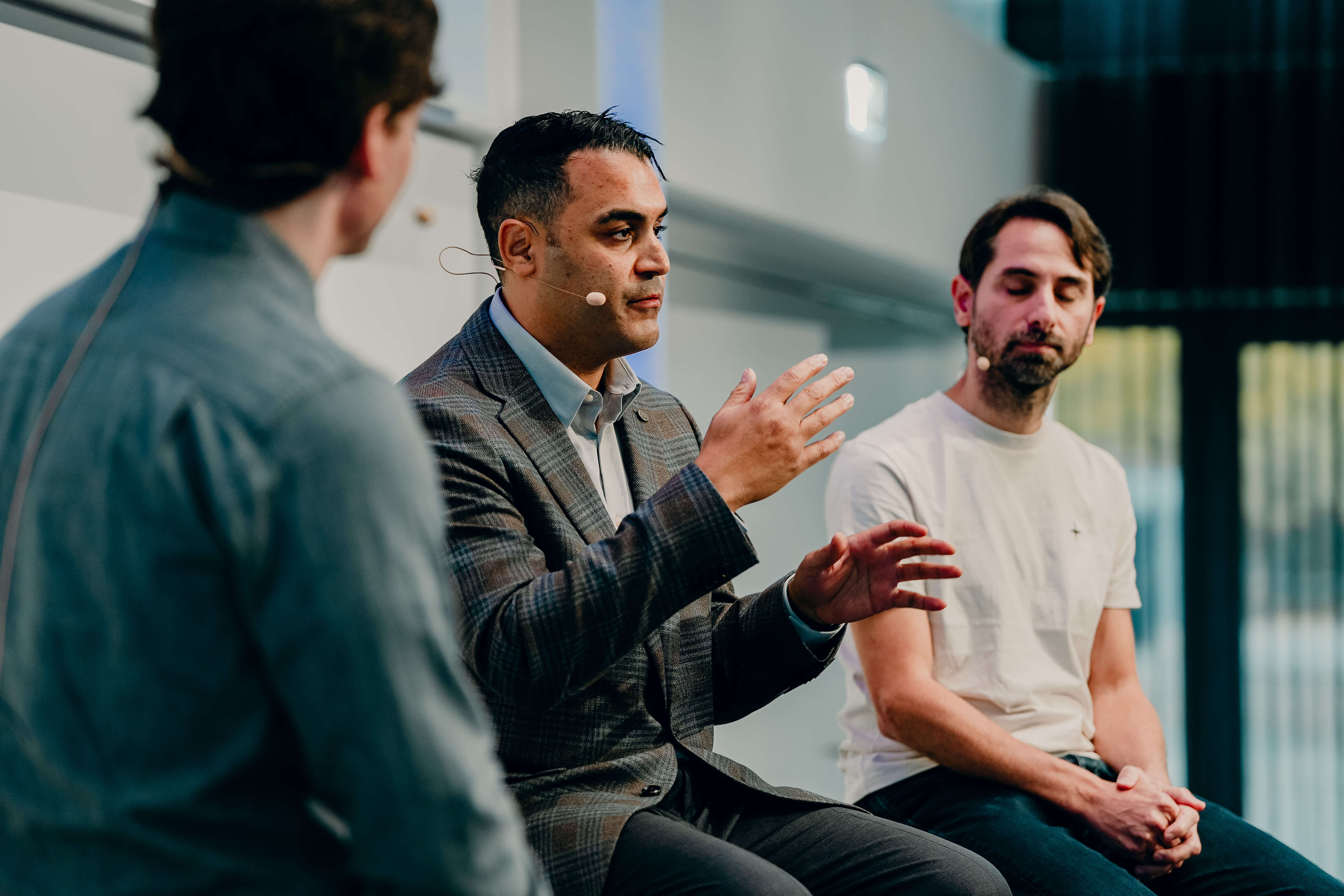
Stay Curious, Stay Creative, Stay Human
Ultimately, Waves is both an event about realizing the value of business today and looking toward the future.
Every speaker at the annual event talked about the future of AI that we're all building together, but two sessions particularly focused on this topic.
"AI Is for People"
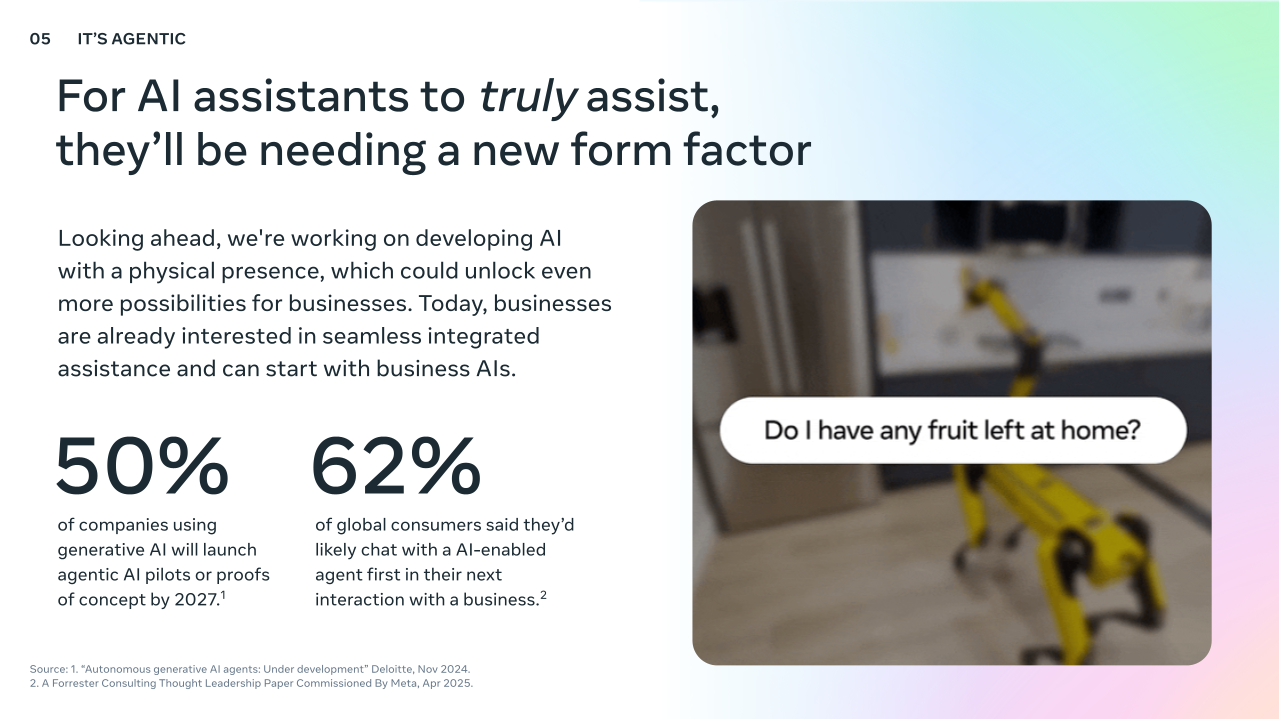
Meta's Head of Partnerships EMEA Measurement and Signals, Timo Thomsen, shared trends Meta is observing across society.
In particular, he reminded us that AI is not just about efficiency — it's about people.
AI helps users find purpose, connect with creators, and opens entirely new ways for individuals and brands to engage with the world.
Looking toward the future, he predicted evolution not only toward agentic automation in AI workflows but from AI agents toward hands-free AI experiences that involve all our senses.
Webflow's CRO Adrian Rosenkrantz closed the afternoon sessions with similar views.
After noting how generative AI has changed the existing rules about SEO, web traffic, and online customer conversion almost overnight, he offered two solutions.
The first was using powerful automation tools like Make to respond to changing consumer behavior, optimize the technical and content aspects online, and continuously iterate to match the AI algorithms that determine who ranks at the top of the internet.
"Creativity will be every brand's superpower. Brands that create beautiful experiences will come out ahead." - Adrian Rosenkrantz, CRO at Webflow
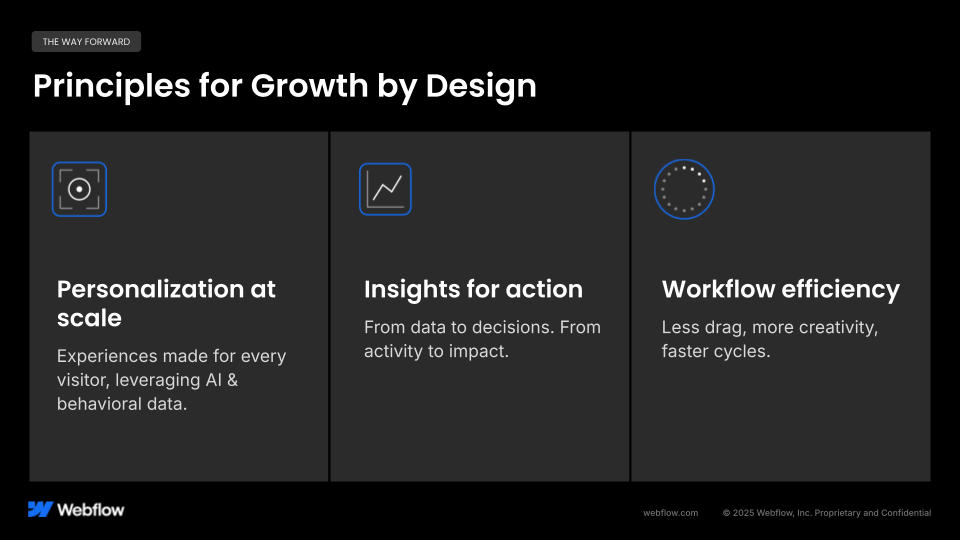
But the latter part of his solution contained the surprising idea of creating growth through design.
Going forward, brands with aesthetic and emotional appeal that transcends LLMs will be the ones most effectively speaking to the people who ultimately want to know, use, and love their products.
AI helps make design goals easier to achieve and iterate on, but human ideas and desires should still remain at the center.
This final appeal brings us back to what Waves '25 and Make are fundamentally about.
Make provides a powerful platform with diverse automation and AI capabilities to help you build, accelerate, and scale to create real business results.
But Make achieves this in a unique way that speaks to everything that makes us human — creativity, exploration, continuous learning, and a bit of fun.
IMPAKERS Blog | 2025 Second Half Make News Read more
Source: Make, "The biggest ideas out of Waves '25", https://www.make.com/en/blog/make-waves-25-sessions, (2025-10-24)